

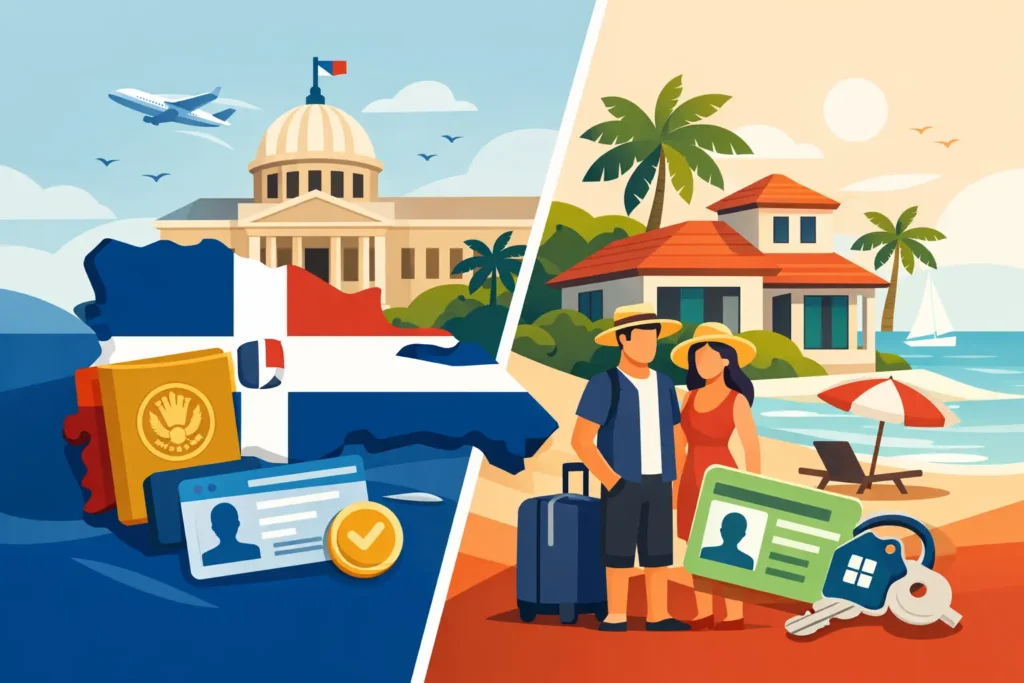
A beach home, a growing business, or a retirement plan can make the Dominican Republic feel like the obvious next move. But before booking a one-way flight, foreign nationals need to understand the legal status behind that decision. The question of citizenship vs residency Dominican Republic is not merely a matter of terminology. Each status creates different rights, responsibilities, timelines, and planning opportunities.
For most people relocating from the United States, Canada, Europe, or elsewhere, residency is the practical first step. Citizenship may become the long-term goal, but it is generally not the starting point. Choosing the correct path early can make it easier to maintain legal status, open financial doors, plan for taxes, and build a stable life in the country.
Citizenship vs Residency in the Dominican Republic
Residency gives a foreign national permission to live in the Dominican Republic on a continuing legal basis. It does not make that person Dominican. A resident remains a citizen of their country of nationality, travels under that passport, and must maintain the immigration status granted by Dominican authorities.
Citizenship, often obtained through naturalization by a foreign-born adult, creates a legal bond with the Dominican Republic. A citizen may qualify for a Dominican passport, participate in political life subject to applicable rules, and does not need to renew a residency card to remain in the country.
The distinction matters because a residency card is not a passport to every right of citizenship. At the same time, citizenship is not automatically necessary for someone who wants to retire in Punta Cana, own a home in Las Terrenas, operate a company in Santo Domingo, or spend most of the year near family in Santiago. Many clients find that permanent residency fully supports their lifestyle and business objectives.
Residency: The right to establish legal residence
Dominican residency is commonly structured in stages. A foreign national generally begins with a visa that matches the purpose of the application, then applies for temporary residency after arriving in the country. Temporary residency must be renewed and maintained under the applicable rules. After meeting the required period and conditions, the resident may be eligible to pursue permanent residency.
The appropriate route depends on the applicant’s circumstances. Retirees may rely on pension income. Investors may use a qualifying investment route. Entrepreneurs, employees, families, students, and applicants with independent income can have different supporting-document requirements. The right category is not a minor detail. It affects the evidence needed, expected processing path, and the way an applicant presents their ties to the Dominican Republic.
Permanent residency generally offers greater stability than temporary residency, though it still requires attention to renewal dates and compliance. It is often the best fit for people who intend to make the country their primary or significant secondary home without seeking a second nationality immediately.
Citizenship: A long-term legal and personal commitment
Naturalization is a separate legal process. In many ordinary cases, an applicant must first hold permanent residency and satisfy a qualifying residence period before applying for Dominican citizenship. The standard pathway is commonly associated with two years of permanent legal residency, although individual facts, legal reforms, and special categories can affect timing.
Certain investors may have access to an accelerated route under applicable Dominican rules, but an investment alone should never be treated as a guaranteed citizenship purchase. Eligibility, documentation, source-of-funds evidence, residence history, and government review remain essential. A qualified legal review should take place before an applicant structures an investment around immigration expectations.
Citizenship also involves more than obtaining a passport. The naturalization process may require applicants to demonstrate lawful status, good conduct, and meaningful compliance with Dominican legal requirements. Authorities can request civil records, police certificates, translated and apostilled documents, proof of financial standing, and other records tailored to the case.
What Residency Can Do for You
A valid residency status can make daily life in the Dominican Republic substantially easier. Residents are better positioned to establish local relationships and complete transactions that may be difficult for short-term visitors. Depending on the institution and the individual’s profile, residency can support bank account applications, local contracts, insurance arrangements, driver’s license processes, and longer-term housing plans.
Residency can also provide a stable basis for family life. A spouse, children, or dependent family members may have options connected to the principal applicant’s status, subject to the rules and documentation requirements in effect at the time of filing. Families should plan together from the beginning rather than assume that one approved application automatically resolves everyone’s status.
For business owners, legal residency can complement a Dominican company structure, but it does not replace corporate, labor, tax, licensing, or banking compliance. A foreigner may be able to own a Dominican business without being a citizen, and in many cases without residing full time in the country. Still, entrepreneurs who will manage operations locally often benefit from aligning their personal immigration status with their commercial plans.
What Citizenship Adds
The most visible benefit of Dominican citizenship is eligibility for a Dominican passport. This can be meaningful for frequent travelers and for families seeking a durable connection to the country across generations. Citizenship may also provide rights that residents do not have, including broader political participation and freedom from the residency renewal cycle.
For someone who has spent years building a life in the country, naturalization can offer permanence that feels personal as well as practical. It may be especially appealing to long-term residents with Dominican spouses, children, businesses, property, or deep community ties.
Still, citizenship should be pursued because it fits the person’s long-term plan, not because it appears to be the fastest answer to a residency problem. A rushed application, incomplete document trail, or misunderstanding about eligibility can create delays and unnecessary expense. Residency remains a strong, respected status for many foreign nationals.
Tax Residency Is a Separate Question
Immigration residency and tax residency are related, but they are not identical. This is one of the most important points for retirees, investors, remote workers, and business owners to understand.
A person may hold Dominican immigration residency while their tax position depends on factors such as physical presence, income source, domicile, business activity, and applicable tax rules. Spending 182 days or more in the country during a fiscal period is often a key threshold in Dominican tax-residency analysis, but it is not the only issue worth reviewing.
Tax planning should begin before relocation, particularly for Americans who continue to have U.S. filing obligations, Canadians with departure-tax concerns, and investors with foreign companies, trusts, rental income, or substantial portfolios. The Dominican Republic has provisions that can be favorable for certain new residents, but benefits and obligations must be assessed against the individual’s full financial picture. Immigration approval should not be treated as a substitute for cross-border tax advice.
Which Status Is Right for Your Plan?
Residency is usually the better immediate choice if your goal is to live legally in the Dominican Republic, retire comfortably, manage local affairs, spend extended periods with family, or establish a business presence. It provides a structured route into the country without requiring a person to change nationality right away.
Citizenship may be the stronger objective if you expect the Dominican Republic to become your permanent home, want a Dominican passport, intend to participate fully in civic life, or want to formalize a lasting national connection. It can also be relevant for families thinking beyond one generation.
The best answer often changes over time. A retiree may begin with temporary residency, transition to permanent residency, and later decide citizenship makes sense. An investor may need an immigration strategy that moves more quickly but still requires careful documentation. A remote worker may discover that legal residency, tax exposure, and business registration need to be coordinated rather than handled as separate projects.
Prepare Before You File
Successful applications begin with documents, not forms. Foreign-issued birth certificates, marriage certificates, divorce decrees, police clearances, proof of income, and corporate records may need to be current, properly apostilled or legalized, and translated into Spanish. Small inconsistencies in names, dates, or prior addresses can delay a case.
Applicants should also avoid overstaying visitor status while assuming they can solve the issue later. Maintaining a clean immigration record, following renewal deadlines, and keeping copies of every filing and approval support both residency maintenance and any future citizenship application.
Abreu & Associates provides all-inclusive immigration services designed to coordinate the legal process with the practical tasks of settling in, from document preparation and residency filings to banking, business, and relocation support. A tailored review can identify the route that matches your purpose, timeline, family structure, and financial profile.
Your status in the Dominican Republic should support the life you are building there. Start with the legal foundation that fits today, keep it in good standing, and let citizenship remain a considered next step when the country has truly become home.