
A birth certificate issued in the United States may be perfectly valid at home and still be unusable for a Dominican residency application until it has been authenticated correctly. That gap causes avoidable delays for families, retirees, investors, and professionals preparing to relocate. Understanding how to legalize foreign documents Dominican Republic authorities will accept means knowing which authentication route applies to your country, when to translate, and how recent each document must be.
The process is not one-size-fits-all. The Dominican Republic recognizes apostilles from countries that participate in the Hague Apostille Convention. Documents from countries outside that convention generally require a longer consular legalization process. The receiving institution also matters: immigration, a bank, a civil registry office, and a business registration process may each request different documents or have their own rules on document age and translations.
How to Legalize Foreign Documents for the Dominican Republic
Before requesting an apostille or visiting a consulate, identify three things: the exact document required, the country and authority that issued it, and the Dominican institution that will receive it. This prevents a common and expensive error: authenticating the wrong version of a document.
For example, a residency file may require a certified long-form birth certificate, not a short-form informational copy. A marriage certificate may need to be a newly issued certified copy even when the marriage itself occurred decades ago. Criminal background checks are often subject to short validity windows, so ordering one too early can force you to start again.
Ask the receiving Dominican authority, or your legal representative, whether it needs the original, a certified copy, a translation, and a document issued within a particular period. Do this before beginning the authentication chain.
Start with a properly issued original or certified copy
Legalization confirms the authenticity of an official signature or seal. It does not repair a document that was issued incorrectly, contains inconsistent names, or is not the form the Dominican authority requires.
Review every document against your passport and the rest of your file. Pay close attention to middle names, prior surnames, dates, and places of birth. Small differences are not always fatal, but they can lead to questions that take time to resolve. If there has been a name change through marriage, divorce, adoption, or court order, obtain the supporting record early.
For U.S. vital records, the correct issuing authority is usually the state where the event occurred. A birth certificate from Texas, for example, must normally be obtained from the appropriate Texas office before it can receive a Texas apostille. A photocopy or a document printed from a genealogy website is generally not an appropriate starting point.
Use an apostille when your issuing country is a Hague Convention member
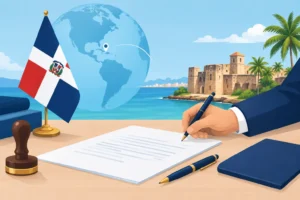
An apostille is a standardized certificate used between countries that are parties to the Hague Apostille Convention. Because both the United States and the Dominican Republic participate in the convention, many U.S. public documents can be prepared for use in the Dominican Republic with an apostille rather than traditional embassy legalization.
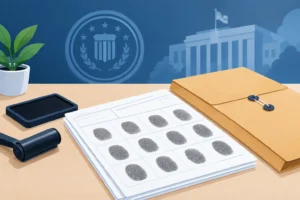
The apostille must come from the competent authority in the country where the document was issued. In the United States, this often means the Secretary of State for state-issued documents such as birth certificates, marriage certificates, state court records, and certain notarized documents. Federal documents follow a different route. For instance, an FBI identity history summary typically requires an apostille through the U.S. Department of State.
The key principle is simple: the apostille authenticates the signature of the official who signed or certified the document. It must be attached by the authority authorized to verify that specific signature. A Dominican office cannot apostille a U.S. birth certificate, and a U.S. state cannot apostille a document issued by another country.
When an apostille applies, additional legalization by a Dominican consulate or the Dominican Ministry of Foreign Affairs is generally not required. Adding unnecessary steps can consume time without improving the document’s validity.
Follow the consular route for non-Hague documents
If the document comes from a country that is not party to the Hague Apostille Convention, it may need traditional consular legalization. Although the precise order varies by country, the process often involves authentication by the issuing authority, certification by that country’s foreign ministry, legalization by the Dominican consulate with jurisdiction, and any final step required in the Dominican Republic.
This route demands careful planning because each authority may have its own appointment system, fees, processing times, and document-format requirements. A consulate may also require previous authentications to be completed in a particular order. Do not assume that a notarization alone is sufficient.
For documents from non-Hague countries, confirm the current chain directly with the Dominican consulate responsible for the place of issuance and with the Dominican institution that will receive the document. Requirements can change, and the wrong sequence may mean paying to obtain a new document.
Translation Comes After Authentication
Most foreign-language documents presented to Dominican authorities must be accompanied by a Spanish translation. In many legal and immigration matters, a translation prepared by a Dominican judicial interpreter is the safest option because the translator understands the format expected by local institutions.
Translation should generally occur after the apostille or consular legalization is complete. The translator needs to translate not only the underlying certificate, record, or affidavit, but also the apostille certificate and relevant stamps or seals. Translating first may require a second translation once the apostille has been added.
English-language documents are not automatically exempt. Even when an official can read English, the file may still require a formal Spanish translation for administrative and legal purposes. A bank or a private company may be more flexible than an immigration office, but flexibility should never be assumed for a high-stakes filing.
Timing Matters More Than Most Applicants Expect
An apostille itself does not usually expire. The underlying document, however, may become too old for the purpose for which you intend to use it. This is especially relevant for police certificates, medical reports, bank letters, and other records meant to show your current situation.
The practical challenge is coordinating several timelines at once. If you request a criminal record too early, it may expire while you wait for a visa appointment or gather financial evidence. If you wait too long, apostille processing and translation can postpone your application. Immigration requirements, nationality, document type, and the location of the applicant can all affect the right schedule.
A sensible approach is to obtain durable civil records first, such as birth and marriage certificates, then move to time-sensitive records closer to the filing date. Keep originals protected and maintain clear digital scans of every page, including apostilles, translations, stamps, and receipts.
Common Mistakes That Delay Dominican Filings
The most frequent mistakes are procedural rather than legal. Applicants often apostille a photocopy instead of a certified record, use an apostille from the wrong authority, submit a background check that has aged out, or translate the document before the authentication is attached.
Another recurring issue is assuming that all documents need the same treatment. A U.S. birth certificate, an FBI background check, a Canadian corporate document, and a notarized power of attorney can each follow different authentication rules. The fact that one document received an apostille does not mean the same office can apostille every other document in your file.
It is also wise to avoid laminating documents, separating an apostille from the document it authenticates, or making unofficial alterations. Authorities need to see the document as issued, with its authentication attached and intact.
When Professional Coordination Is Worth It
For a single document, the process may be manageable with careful instructions. For a residency application, family relocation, corporate formation, property transaction, or citizenship matter, document preparation becomes a coordinated project. A missing translation or improperly authenticated record can delay a filing that depends on appointments, financial documents, medical exams, or visa timing.
Abreu & Associates helps clients coordinate document review, apostille and legalization requirements, certified translations, and Dominican immigration filings as part of an all-inclusive relocation strategy. The goal is not simply to collect stamps, but to prepare documents in the form the receiving authority is prepared to accept.
Before sending away for any record, confirm the document’s destination, required format, authentication route, translation requirement, and validity period. A few minutes of verification at the start can protect months of relocation planning later.