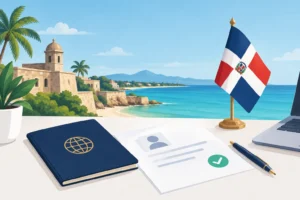
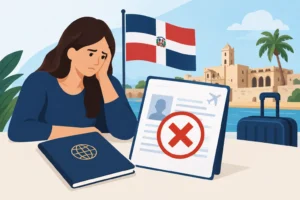

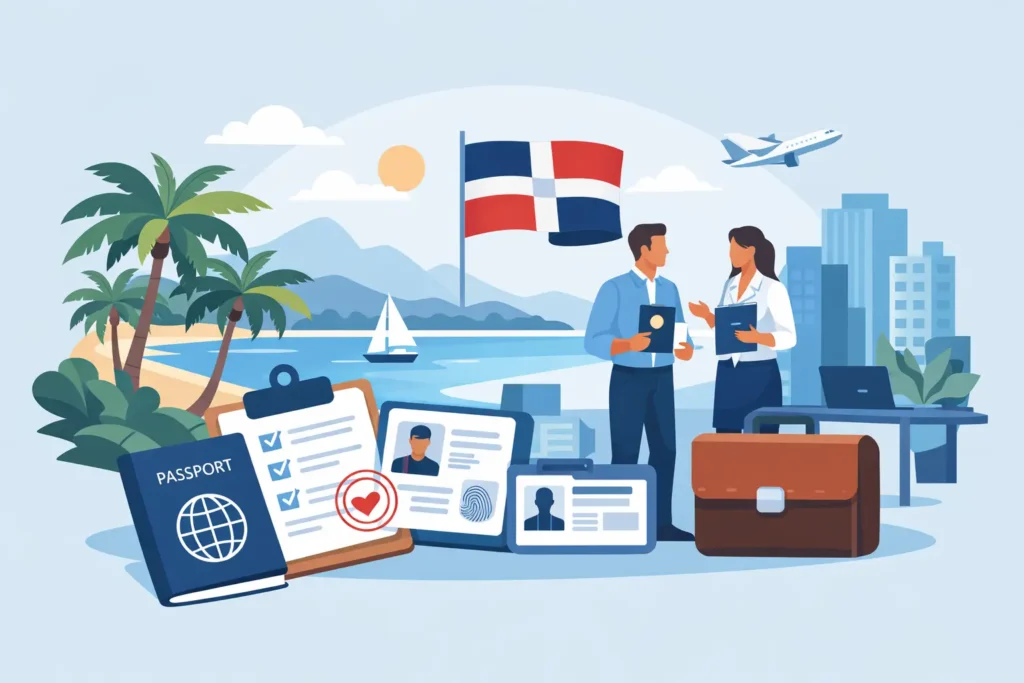
A job offer in the Dominican Republic is an exciting milestone, but it should not be treated as permission to begin working. The work permit process Dominican Republic employers and foreign professionals follow involves more than an employment contract. It connects immigration status, labor compliance, document legalization, and the employer’s own obligations under Dominican law.
For many foreign nationals, the practical question is not simply, “Can I get hired?” It is, “What status do I need to live and work legally, and in what order should my employer and I act?” Getting that sequence right can prevent delays, rejected filings, and complications when opening a bank account, enrolling in health insurance, or renewing residency later.
Who needs authorization to work in the Dominican Republic?
Foreign nationals who will perform work for a Dominican employer generally need appropriate immigration status and work authorization. A tourist entry or short-term visitor status is not designed for ongoing local employment. Even when an individual has a signed contract, the employer should not assume that the contract alone resolves immigration or labor requirements.
The exact route depends on the person’s circumstances. A professional recruited by a Dominican company, an executive assigned to a local affiliate, an investor managing an operating business, and a person providing services remotely for a foreign company may each face different considerations. The source of income, where the work is performed, the employing entity, and the intended length of stay all matter.
A foreign business owner should also be careful not to confuse company ownership with permission to work. Forming a Dominican company can be an important step for an investor, but it does not automatically grant immigration status or eliminate the need to address work authorization.
The work permit process in the Dominican Republic
In practice, the process usually requires coordination between the foreign employee, the Dominican employer, the Ministry of Labor, and immigration authorities. Requirements and administrative practices can change, so the correct path should be confirmed before the employee relocates or starts local work.
1. Confirm the employment structure and eligibility
The first step is to identify the proposed role and the legal relationship behind it. Is the person being hired by a Dominican company? Will they hold a management, technical, or specialized position? Are they relocating with family members? Does the company already meet its Dominican workforce requirements?
Dominican labor law includes nationality rules for employers, generally requiring a substantial portion of a company’s workforce to be Dominican. Certain roles and fact patterns may be treated differently, including executive, management, technical, or specialized positions. The details matter. An employer should evaluate compliance before committing to a start date or issuing a final employment offer.
This early review is particularly valuable for smaller companies and new ventures. A business may have a legitimate need for a foreign specialist, but the position and staffing structure should be documented clearly enough to support the application.
2. Prepare the foreign national’s civil and background documents
Most work and residency-related filings depend on documents issued outside the Dominican Republic. Gathering them early is one of the best ways to keep a relocation plan on schedule. Depending on the case, the foreign national may need a valid passport, birth certificate, police clearance or criminal background check, medical documentation, photographs, and completed government forms.
Documents issued abroad often need to be apostilled or legalized and translated into Spanish by an authorized translator when necessary. A document that appears perfectly valid in the United States may still be unusable for Dominican filing purposes if its apostille, translation, certification, or validity period is incorrect.
Background checks deserve special attention. US applicants may need an FBI identity history summary, while Canadian applicants may need an RCMP check. These documents can take time to obtain, and authorities may require them to be recent. It is wise to plan document collection around filing timelines rather than collecting everything months before the application is ready.
3. Obtain the correct visa or residency status
For foreign nationals relocating for employment, the immigration path commonly begins before arrival or is coordinated with a residency application after entry, depending on the individual’s nationality, intended activity, and current status. A work-related visa may be part of the process, followed by temporary residency and related authorization to work.
This is where generic online checklists can be misleading. A person already in the Dominican Republic under another valid status may have a different route from someone applying from the United States. Likewise, an executive transferred by a multinational company may require a different strategy than a retiree who later decides to participate actively in a local business.
The goal is to establish a status that supports both legal residence and the intended employment activity. Filing an application without considering the full immigration plan can create an avoidable gap between the ability to enter the country and the ability to work lawfully.
4. File the employer-side work authorization request
The employer typically plays an active role in the work authorization stage. The company may need to provide its corporate registration documents, tax information, proof of good standing, labor registrations, and an employment contract or offer letter describing the position, salary, duties, and duration of employment.
Authorities may also request information supporting the company’s need to hire a foreign national. For specialized positions, this can include evidence of the employee’s qualifications, professional experience, or technical expertise. The stronger and more consistent the employment file, the easier it is to address questions from the reviewing authority.
The employee’s immigration records and the employer’s corporate records should tell the same story. Job title, salary, employer name, work location, and anticipated length of employment should be aligned across the contract, immigration forms, and supporting letters. Small inconsistencies can cause significant delays.
5. Complete local registration and employment obligations
Once the necessary authorization is in place, the employer still has ongoing responsibilities. Hiring a foreign employee can involve payroll registration, social security considerations, tax withholding, and labor-record compliance. The employee may also need assistance obtaining a Dominican identification card after residency approval, opening a bank account, arranging health insurance, and obtaining a local driver’s license.
These are not merely settlement details. They often affect whether the employee can be paid, access services, and establish a stable life in the country. A well-managed relocation plan addresses them alongside the formal permit application rather than treating them as afterthoughts.
Common delays and how to avoid them
The most common delays are rarely caused by one major legal issue. More often, they come from documents that were apostilled incorrectly, translations that do not meet local standards, police certificates that expired before filing, or company records that do not match the employment application.
Another frequent issue is timing. Some employers wait until a foreign national has arrived, found housing, and is ready to start work before addressing immigration requirements. That approach can place both parties in an uncomfortable position. A better strategy is to map the anticipated start date backward, allowing time for document collection, consular processing where required, immigration filings, and government review.
Remote work requires particular care. A person living in the Dominican Republic while receiving income from a foreign employer may not have the same employment arrangement as someone hired by a Dominican company. However, immigration, tax, and residency questions can still arise. The facts should be reviewed individually rather than relying on assumptions about the term “digital nomad.”
When family, investment, or a business is involved
Work authorization is often only one part of a larger move. A spouse or children may need dependent residency planning. An investor may need to decide whether an investment-based residency pathway better fits their long-term plans. An entrepreneur may need corporate formation, tax guidance, commercial contracts, and a banking strategy before hiring anyone locally.
These decisions are connected. For example, a person seeking long-term residence and eventual citizenship may choose a different immigration strategy than someone accepting a one-year executive assignment. The fastest filing route is not always the strongest long-term solution.
Abreu & Associates helps clients coordinate immigration filings with the practical legal steps that make a Dominican move workable, including document preparation, residency planning, business formation, banking support, and settlement services.
A compliant work arrangement gives a foreign professional more than permission to take a job. It gives the employer confidence, protects the employee’s future immigration options, and creates a more stable foundation for life in the Dominican Republic.