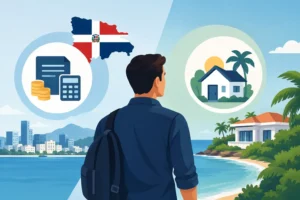
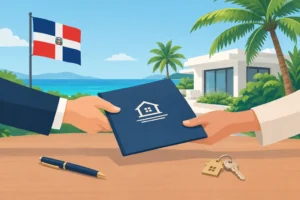

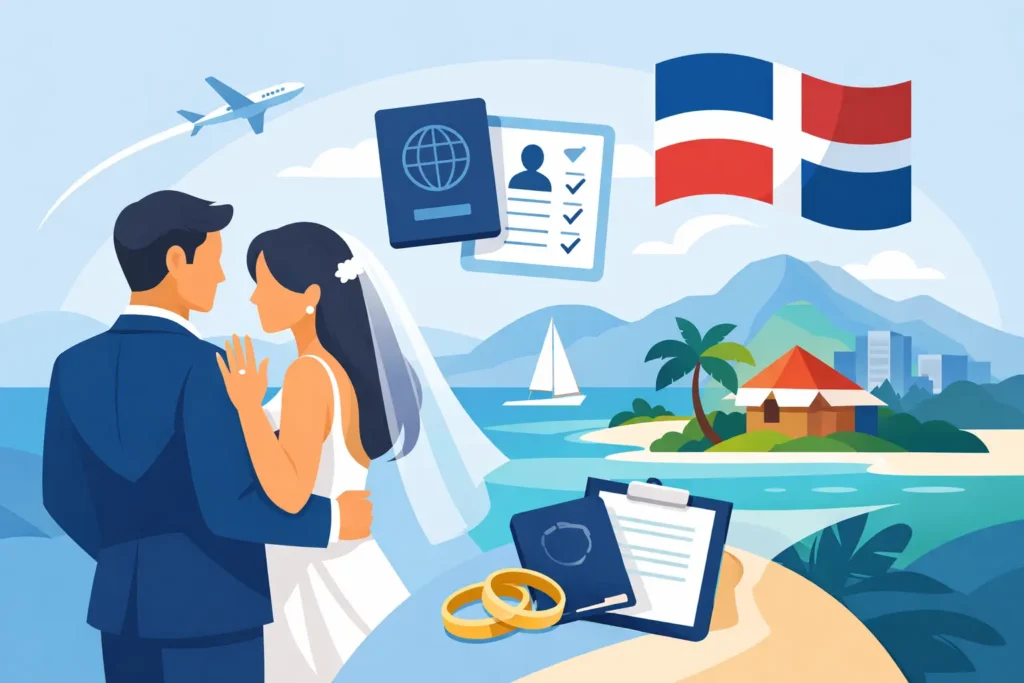
A Dominican marriage can create a meaningful path toward a permanent future in the country, but it does not provide an automatic passport. Dominican Republic citizenship by marriage is a naturalization process that requires planning, valid documentation, and proof that the foreign spouse meets the country’s residence and legal requirements. For couples building a life in the Dominican Republic, understanding the order of each step can prevent costly delays.
Dominican Republic citizenship by marriage is not automatic
Marriage to a Dominican citizen may make a foreign national eligible for a more favorable naturalization route than other applicants. It does not, however, automatically grant Dominican nationality on the wedding day. A foreign spouse must first establish and maintain lawful immigration status, satisfy the applicable residence requirement, and submit a naturalization application for government review.
This distinction matters because many couples confuse marriage registration, residency, and citizenship. They are separate legal processes. A legally recognized marriage helps establish eligibility, while residency demonstrates the applicant’s lawful and established connection to the Dominican Republic. Naturalization is the final step through which the state grants citizenship.
The rules and how authorities apply them can change. Timing also depends on the applicant’s immigration history, the validity of the marriage documents, and whether the file is complete when submitted. For that reason, couples should treat citizenship as a planned legal process rather than a benefit that follows automatically from marriage.
The typical path from marriage to naturalization
For most foreign spouses, the practical route begins with obtaining Dominican residency. Depending on the applicant’s circumstances, this can involve a residency category based on family ties, income, investment, employment, retirement, or another qualifying basis. Marriage to a Dominican citizen can be central to the application, but it should be supported by a complete and credible file.
After receiving the appropriate residence status, the foreign spouse must maintain it properly. This includes keeping immigration documents current, following renewal requirements, and preserving evidence of a genuine domicile and life in the Dominican Republic. Gaps in legal status or expired documentation can complicate a later naturalization request.
Dominican naturalization rules have historically recognized an accelerated route for a foreign national married to a Dominican citizen and established in the country, often associated with a reduced residence period. The precise period and requirements should be confirmed for the applicant’s case before filing. A reduced timeline is not the same as a guaranteed approval, and the government retains authority to examine eligibility and the supporting evidence.
A valid marriage must be recognized
The marriage itself must be legally valid and capable of recognition by Dominican authorities. If the marriage took place outside the Dominican Republic, the foreign marriage certificate may need apostille or legalization, a certified Spanish translation, and registration or transcription steps where required.
A Dominican marriage certificate does not eliminate the need to prove the foreign spouse’s identity, immigration history, and good standing. It also does not prevent the government from reviewing whether the marriage is genuine. Couples should expect to provide consistent information about their shared residence, family circumstances, and relationship history when requested.
Documents that commonly support the application
Naturalization files are document-heavy, especially when records originate in more than one country. The exact list varies by case and by the authority reviewing the file, but applicants commonly need a valid passport, birth certificate, marriage certificate, Dominican residency documents, and identification for the Dominican spouse.
Foreign-issued civil documents generally need the proper apostille or legalization before they can be accepted in the Dominican Republic. Documents not issued in Spanish typically require an official translation. Police certificates, medical documentation, photographs, proof of address, and evidence of financial or professional activity may also be requested depending on the application.
For a marriage-based case, it is wise to gather records that demonstrate the couple’s established life together. This may include a shared lease or property records, utility bills, joint financial records where available, records involving children, or other credible evidence of a common household. Not every couple will have the same evidence, particularly if one spouse travels frequently or owns property separately. The goal is a file that accurately reflects the couple’s real circumstances.
Small document errors can have outsized consequences. A birth certificate with a misspelled name, a marriage certificate that does not match the passport, or an expired police certificate may result in requests for corrections or updated documents. Addressing these issues before filing is generally faster than trying to resolve them after an application is already under review.
What the citizenship process may involve
Once the applicant has met the residence and marriage-related conditions, the naturalization process generally involves preparing the application, submitting supporting records, paying applicable government fees, and responding to any requests from the relevant authorities. Applicants may be asked to attend an interview, provide additional documents, or complete other formalities connected to the review.
Processing times are not fixed. They can be affected by the completeness of the file, government workload, document verification, and case-specific questions. Applicants should be cautious about anyone promising a precise approval date or suggesting that citizenship can be secured without a lawful residence history.
If naturalization is approved, there may be additional steps before the new citizen can obtain Dominican identity documents and a passport. Those administrative steps should be planned as part of the overall timeline, particularly for clients who need citizenship for family planning, travel, property matters, or business activities.
Common issues that can slow down a marriage-based case
The most frequent obstacles are usually preventable. An applicant may have started residency under one category but failed to renew it on time. A foreign marriage may not have been properly legalized or translated. The couple may also have documents that contain inconsistent dates, names, or places of birth.
Another issue is assuming that a marriage certificate alone proves eligibility. Authorities can look at the full picture, including whether the foreign spouse has established a lawful and credible connection to the Dominican Republic. A short or interrupted period of residence, incomplete immigration records, or insufficient evidence of domicile can all require additional attention.
Couples should also consider how life changes may affect the application. Divorce, separation, the death of a spouse, a move outside the country, or changes in residency status can alter the available path. There is no single answer that applies to every family, which is why an early legal review is valuable.
Plan citizenship alongside your relocation goals
Citizenship should fit into a broader Dominican Republic plan. A foreign spouse may need help securing residency, registering foreign documents, opening a bank account, understanding tax residence, obtaining a driver’s license, or setting up a business before naturalization becomes the immediate priority. Handling these pieces in the right sequence creates a more stable foundation for the family’s long-term plans.
It is also worth considering the implications of dual nationality. The United States generally permits dual citizenship, but each person’s home-country laws and personal circumstances should be reviewed. Citizenship can affect travel, tax reporting, inheritance planning, and the ability to hold certain rights and responsibilities in the Dominican Republic.
Abreu & Associates helps foreign nationals organize the immigration, document, and settlement steps that support a well-prepared naturalization strategy. The right approach begins with a clear assessment of the marriage, current immigration status, and the life you intend to build in the Dominican Republic.
For couples, the strongest citizenship application is rarely the fastest-looking one. It is the one built on valid documents, continuous legal status, and a carefully documented shared life in the country.