

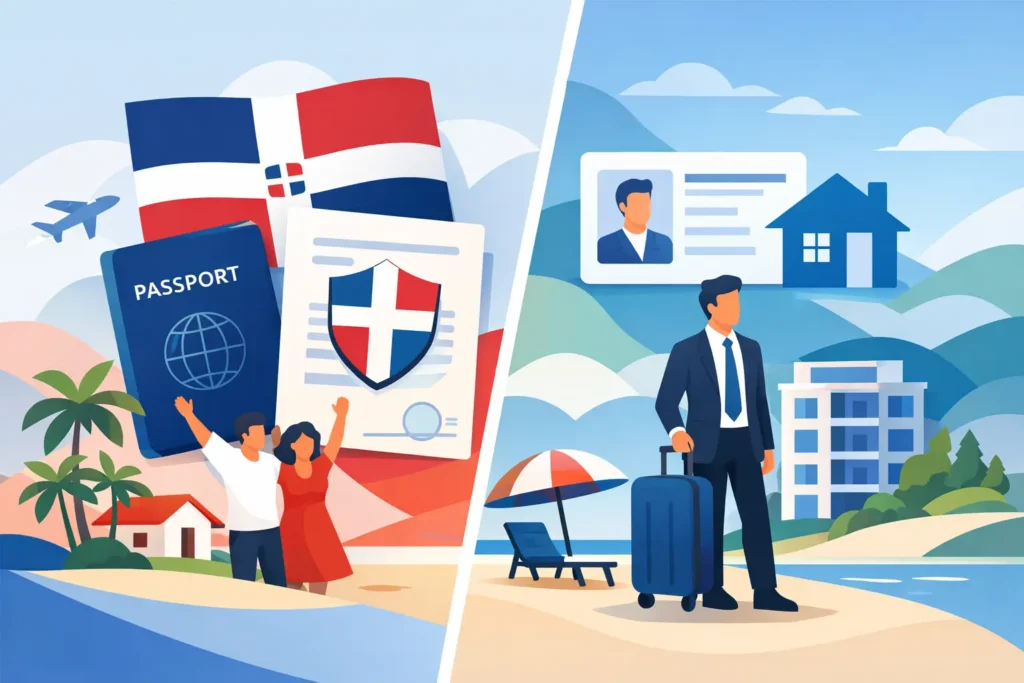
A Dominican Republic relocation can begin with a practical question: do you need citizenship, or do you simply need the right to live here legally? The answer shapes your timeline, documentation, mobility, and long-term plans. When comparing Dominican citizenship vs residency benefits, the best option is rarely the one with the biggest list of privileges. It is the one that fits how you intend to live, work, invest, and maintain ties to your home country.
For many foreign nationals, legal residency is the appropriate first objective. It can support a comfortable life in the Dominican Republic without requiring a change in nationality. Citizenship may become the right next step for people building permanent roots, raising children locally, or seeking the broader rights that come with being Dominican.
Dominican Citizenship vs Residency Benefits: The Core Difference
Residency is an immigration status. It gives a foreign national authorization to reside in the Dominican Republic and, depending on the category and approvals involved, can support work, business activity, banking, licensing, and other aspects of daily life. It does not make a person a Dominican national.
Citizenship, also called nationality, is a legal bond with the Dominican Republic. A naturalized citizen generally holds the rights and responsibilities of a Dominican national, including the ability to obtain a Dominican passport and participate in national civic life. Citizenship is a more permanent legal status, but it also involves a more demanding pathway and closer review of an applicant’s record and connection to the country.
The distinction matters because relocation decisions are not one-size-fits-all. A retiree who spends most of the year in Punta Cana may be well served by residency. An entrepreneur moving a family, expanding operations, and planning to remain for decades may see greater value in pursuing citizenship once eligible.
What Dominican Residency Can Do for You
Residency is often the foundation of a legal, stable life in the country. Foreign nationals usually begin with a visa process appropriate to their circumstances, followed by temporary residency and later eligibility for permanent residency, subject to the applicable rules and successful renewals.
A valid residency status can make ordinary tasks far more manageable. It may help you establish a more settled presence when dealing with banks, local service providers, insurers, schools, and government offices. It can also support the process of obtaining a Dominican driver’s license and handling certain contracts or registrations that are difficult to manage as a short-term visitor.
Residency is particularly useful for those who want to retire, operate a business, work through an appropriate immigration and labor arrangement, study, or spend substantial time in the Dominican Republic. It provides a legal framework for being here long term rather than relying on visitor status and repeated entries.
It is also worth separating immigration status from property ownership. Foreign nationals can generally purchase real estate in the Dominican Republic without becoming residents or citizens. However, residency can still be beneficial for owners who want to live in the property regularly, manage a local business, arrange financial affairs, or establish a more consistent local presence.
Residency does carry ongoing responsibilities. Documentation must be kept current, and renewals should be handled well before a status expires. Extended time outside the country, changes in family circumstances, or gaps in documentation can affect an individual’s strategy. The appropriate category and renewal approach should be reviewed based on the person’s actual lifestyle, not just their immediate plans.
What Dominican Citizenship Adds
Citizenship goes beyond permission to reside. It gives an eligible naturalized individual a Dominican nationality and access to a Dominican passport. For internationally mobile families, that can be a meaningful consideration, although passport access and visa-free travel rules can change over time and should never be the only reason for a nationality decision.
Citizenship also provides political rights that residents do not have, including the ability to vote when legally qualified to do so. It can offer a stronger sense of permanence for people who regard the Dominican Republic as their enduring home rather than a place of residence for a defined period.
For families, citizenship may carry additional long-term value. A person’s nationality, the place of a child’s birth, and the parents’ immigration status can all affect how citizenship questions are handled. These matters should be evaluated individually, especially in cross-border families where a child may have claims to more than one nationality.
The Dominican Republic recognizes dual nationality in many circumstances. Still, prospective applicants should consider the law of their existing country of nationality before moving forward. The United States generally permits dual citizenship, but another person’s home country may impose restrictions, reporting obligations, or consequences that deserve independent legal review.
Citizenship is not necessary to enjoy the Dominican lifestyle, own a home, run many types of businesses, or establish residency. Its primary value lies in permanence, nationality, a Dominican passport, and the full civic standing that residency cannot provide.
The Path From Residency to Citizenship
For most foreign nationals, naturalization is not a first-step immigration solution. It usually follows a period of legal residence and requires applicants to meet eligibility standards in force at the time of filing. The process can involve reviewing residency history, identity documents, civil records, financial or personal background information, and evidence that the applicant has maintained the required legal status.
The required timeline may differ depending on the individual’s circumstances and the legal pathway being used. Marriage to a Dominican citizen, qualifying investment, family ties, and other factors may affect available options. These cases require careful planning because the correct sequence of visa, residency, permanent residency, and citizenship filings matters.
Applicants should also expect foreign documents to require proper preparation. Birth certificates, marriage or divorce records, police certificates, and supporting documents may need apostilles, certified translations, and consistency checks before they are presented to Dominican authorities. A discrepancy as simple as a different spelling of a name can create delays if it is not resolved early.
Taxes, Work, and Banking: Where People Often Get Confused
Citizenship and immigration residency are not the same as tax residency. A person may become subject to Dominican tax considerations based on time spent in the country, source of income, business activity, and other facts. Spending substantial time in the Dominican Republic can create tax questions even if a person has not yet obtained citizenship.
Likewise, becoming a citizen does not automatically eliminate tax obligations in another country. U.S. citizens, for example, remain subject to U.S. tax filing obligations regardless of where they live. Cross-border tax planning should be coordinated before a move, property purchase, company formation, or major investment decision.
Banking is another area where expectations should be realistic. Residency can improve the documentation profile available to an applicant, but each bank has its own compliance standards. Banks may request proof of income, local address information, tax identification details, references, and documentation showing the source of funds. Citizenship is not a guarantee of account approval, just as residency is not a shortcut around financial compliance.
For business owners and remote professionals, immigration status must align with the work being performed. A local company, payroll arrangement, investment structure, or self-employed activity can create immigration, labor, tax, and corporate compliance issues that should be addressed together rather than in separate stages.
Which Option Fits Your Plan?
Residency is usually the practical choice if you want to live in the Dominican Republic legally, retain your current nationality as your primary status, and keep your options open. It is often appropriate for retirees, part-time residents, remote workers, students, and investors who need a stable legal presence without pursuing full nationality.
Citizenship may be worth pursuing if the Dominican Republic is becoming your permanent home, you want a Dominican passport, you intend to participate fully in civic life, or your family planning makes nationality especially meaningful. It can also provide reassurance to those who do not want their long-term future tied to a renewal cycle.
The right strategy can change over time. Many clients begin with residency, establish a home and local financial life, then evaluate citizenship after they have lived in the country and understand what permanent connection means for them.
A well-planned move should account for more than the immigration application itself. It should consider your family documents, visa category, renewals, business or property plans, tax exposure, banking needs, and future citizenship goals. Abreu & Associates can help coordinate those moving parts so your legal status supports the life you are building in the Dominican Republic, not merely your arrival in it.