
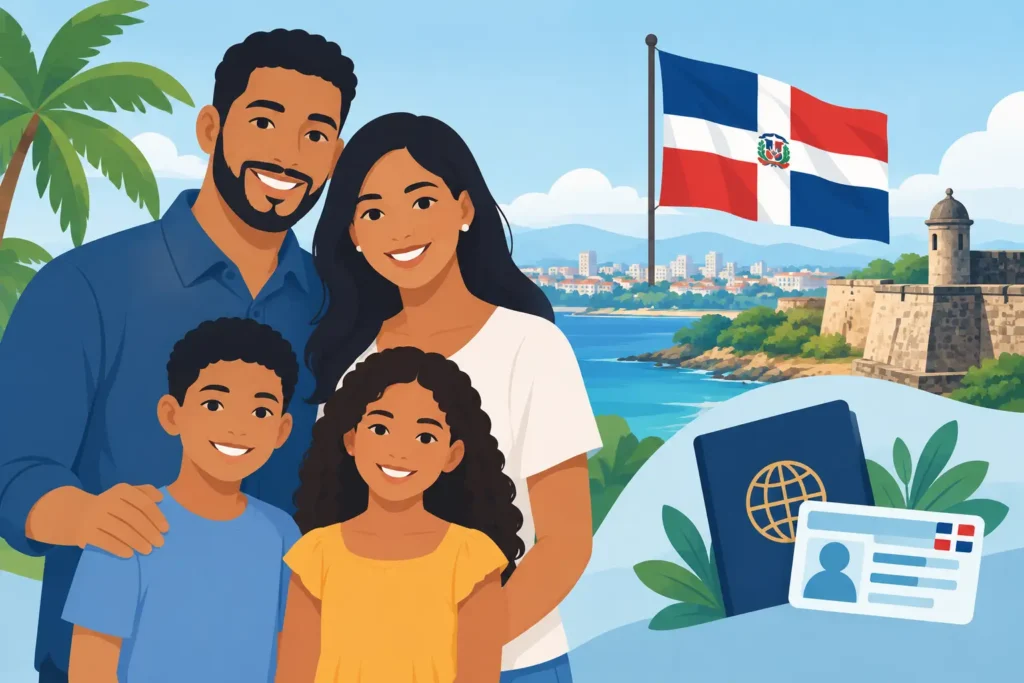
For many families, Dominican family sponsorship is not simply an immigration filing. It is the legal bridge between a relationship that already exists and a life the family intends to build in the Dominican Republic. Whether you are joining a Dominican spouse, reuniting with a parent, or planning a move with dependent children, the process requires careful coordination between civil records, immigration requirements, and the practical realities of settling in a new country.
The right path depends on the sponsor’s status, the family relationship, where documents were issued, and the applicant’s long-term plans. A case involving a Dominican citizen may follow a different route from one involving a foreign national who already holds Dominican residency. That distinction should be addressed before documents are translated, legalized, or submitted.
What Dominican family sponsorship means
In practical terms, family sponsorship refers to a residency or immigration process supported by a qualifying family relationship. The sponsoring family member generally helps establish the basis for the applicant’s request to reside in the Dominican Republic, while the applicant must still meet the applicable legal, documentary, and security requirements.
This process is commonly relevant for spouses, minor children, dependent children, and, in some situations, parents or other dependents. The exact eligibility analysis is fact-specific. Immigration authorities will look beyond a simple statement of relationship and expect documentary proof that the relationship is legally valid and, where relevant, that the dependency is genuine.
Family sponsorship can be particularly useful for couples and families who want to avoid separating their immigration plans from the rest of their relocation. A spouse may be pursuing residency through a Dominican husband or wife, while children require their own properly prepared applications. Families often benefit from treating these as connected filings, even when each person has separate forms and supporting records.
Who may qualify through a family relationship?
The strongest cases usually involve immediate family relationships supported by official civil documents. A legally recognized marriage may support a spouse’s application. A birth certificate may establish the relationship between a parent and child. When a child is older, unmarried, studying, financially dependent, or has special circumstances, additional evidence may be needed to explain why dependency continues.
The sponsor’s legal position matters just as much as the relationship. A Dominican citizen, a permanent resident, and a temporary resident do not necessarily carry the same rights or obligations when supporting a family member. If the sponsor is a foreign national, the status of that person’s own residency should be current and properly documented before a dependent application moves forward.
There are also situations where family sponsorship is not the best first strategy. For example, an entrepreneur with a qualifying investment, a retiree with pension income, or a remote professional with independent means may have another residency route that better matches their circumstances. The best option is not always the one that appears quickest on paper. It is the one that supports the family’s actual plans and can be maintained over time.
Marriage and partnership considerations
A marriage certificate is central to a spousal case, but it is rarely the only document that matters. If the marriage took place outside the Dominican Republic, the certificate may need formal legalization or apostille treatment, followed by a certified Spanish translation when required. Names, dates, and prior marital history must align across the file.
Couples should also be prepared for questions that confirm the marriage is legitimate. Inconsistencies in addresses, names, or prior divorce records can slow a file considerably. Addressing those issues early is far easier than responding after an application has already been delayed.
Children and dependent relatives
Children typically require birth certificates, passports, and documents connecting them to the sponsoring parent. When one parent is not relocating or does not share legal custody, consent or custody documentation may also be necessary. This is a critical point for internationally mobile families, because immigration requirements do not replace family-law obligations.
For adult dependents or parents, financial support and dependency may need to be documented more carefully. Bank transfers, proof of shared residence, medical needs, and evidence of ongoing support can all be relevant depending on the case. A family relationship alone may not establish dependency for every immigration purpose.
Documents that make or break a Dominican family sponsorship case
A well-prepared application is usually built around consistency. Immigration records, police certificates, passports, marriage certificates, birth certificates, and financial evidence should tell the same story. Small discrepancies are common in international documentation, but they should not be ignored.
Most families should expect to gather official identification, civil-status documents, evidence of the sponsor’s Dominican nationality or legal residency, and documents showing financial capacity or support. Applicants may also need police clearance certificates from countries where they have lived, along with medical or other records requested as part of the process.
Foreign-issued documents often create the biggest source of delay. An original document may need an apostille or consular legalization before it can be accepted in the Dominican Republic. It may also need translation into Spanish by an appropriate translator. Requirements can vary based on the issuing country and the type of document, so families should avoid ordering documents too far in advance or assuming that a notarized copy is enough.
It is also wise to review expiration dates at the start. Police certificates, medical documents, and other time-sensitive records can expire while a family waits for another document. Proper planning helps avoid the expense and frustration of obtaining the same record twice.
A practical process for families relocating together
The process often begins before anyone travels. Families should first identify the qualifying relationship, confirm the sponsor’s legal status, and determine the correct immigration category. Depending on the individual case, an applicant may need to obtain an appropriate visa through a Dominican consulate before entering the country to continue the residency process.
Once the correct route is clear, document preparation becomes the priority. This is the stage for obtaining current civil records, apostilles or legalizations, certified translations, and supporting evidence of financial support or dependency. A careful document review at this point can prevent a filing based on incomplete, expired, or inconsistent paperwork.
After submission, applicants should be prepared to comply with appointments, biometrics, medical examinations, and requests for additional evidence where applicable. Processing times can vary, and no responsible advisor should promise a guaranteed approval date. Government procedures, document verification, and individual case factors all affect timing.
Families should also plan for the period after approval. Residency is not a one-time event. Temporary status may need renewal, addresses may need to be updated, and family circumstances can change. A divorce, a child reaching adulthood, the sponsor’s expired residency, or a move outside the country may affect future eligibility. Building a long-term compliance plan is part of protecting the family’s status.
Common mistakes to avoid
One of the most frequent mistakes is assuming that a wedding certificate or birth certificate automatically creates an immigration benefit. These documents establish a relationship, but the applicant still needs to meet the applicable requirements and present a complete file.
Another common error is treating each family member’s application as an isolated task. A principal applicant’s missing financial records or expired residency can affect dependents as well. Families should review the full group’s documentation, travel plans, and deadlines together.
Finally, do not rely on informal translations, outdated police certificates, or documents with unresolved name differences. A surname variation after marriage, a missing second last name, or a prior name on a divorce decree may be explainable, but it should be addressed with supporting documentation rather than left for an officer to interpret.
Planning for life after residency
Residency is only one part of a successful move. Families may also need help arranging health insurance, opening a bank account, organizing tax obligations, enrolling children in school, forming a business, or preparing real estate-related documentation. These decisions can influence how comfortably and compliantly a family establishes itself in the country.
Abreu & Associates helps clients coordinate immigration requirements alongside the practical details that make relocation workable. The value of a coordinated approach is clarity: your family understands what is required, what should happen next, and which decisions deserve legal attention before they become urgent.
A family move is personal, but it should not be improvised. With accurate documents, a strategy suited to your relationship and residency goals, and experienced local guidance, your application can become the first well-organized step toward a stable life in the Dominican Republic.