

A missing signature, an unreadable fingerprint, or an incorrect mailing choice can delay a document that may be central to your Dominican Republic residency application. When you prepare an FBI fingerprint package, the goal is not simply to submit fingerprints. It is to produce a clear, properly documented request that the FBI can process without avoidable follow-up.
For Americans and others who have lived in the United States, an FBI Identity History Summary is commonly requested as part of a Dominican Republic immigration file. Requirements can vary by residency category and personal history, so the fingerprint stage should be planned alongside the rest of your document timeline – especially if the final FBI report will require an apostille and Spanish translation.
Understand What the FBI Is Requesting
An FBI background check request is generally based on an Identity History Summary request. The FBI uses your fingerprints to search its records and issue the resulting report. Your fingerprint card is therefore a core part of the package, but it is not the final document you will submit for Dominican immigration purposes.
In many cases, applicants request the report directly from the FBI or use an approved channeler. The right route depends on the purpose of the report, your timing, and the requirements of the authority receiving it. Direct FBI processing may be appropriate when you need the official federal record for international use. A channeler can sometimes offer a more convenient process, but applicants should confirm whether its output and delivery method meet their specific needs before proceeding.
For a Dominican residency application, the report itself may later need authentication through a federal apostille process and translation into Spanish. Do not confuse that later step with fingerprinting. An apostille does not authenticate the fingerprint card; it is obtained for the final FBI-issued document when required.
What to Include in an FBI Fingerprint Package
The submission method determines exactly what you send. If you are mailing a request, review the FBI’s current instructions before assembling anything, since forms, fees, addresses, and procedures can change. A typical mailed package includes the following items:
- A completed Identity History Summary Request form or the required request details.
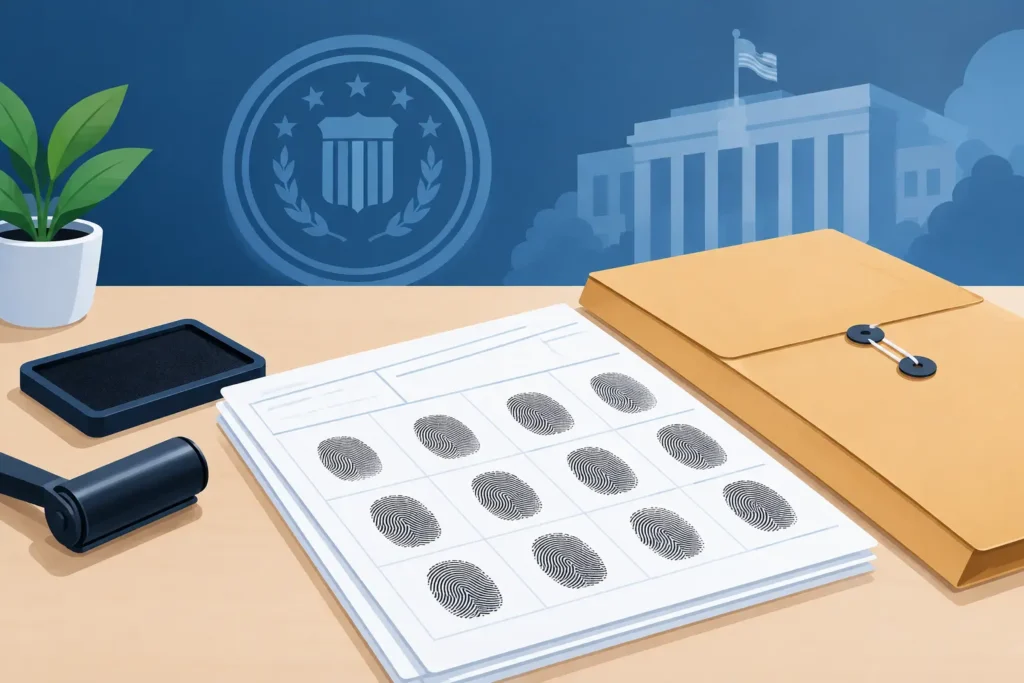
- One or more completed FD-258 fingerprint cards with clear impressions.
- The required payment or payment authorization, using an accepted method.
- A return mailing address and any supporting details requested by the FBI.
Use the official FD-258 format when a fingerprint card is required. Some professional fingerprinting providers supply the cards, while others use printable cards that meet the required specifications. Do not substitute a locally designed form, a police certificate, or a copy of fingerprints taken on an unofficial sheet.
Your identifying information must match across the card and request form. Write your legal name as it appears on your passport or other primary identification, and include prior names when the form requests them. Small inconsistencies can create questions later when the FBI report is compared with a passport, marriage certificate, birth certificate, or Dominican immigration application.
How to Prepare an FBI Fingerprint Package Without Errors
Start with a qualified fingerprinting provider. In the Dominican Republic, this may mean arranging a professional fingerprinting appointment rather than attempting ink prints at home. A trained technician knows how to capture rolled and flat impressions, apply the appropriate amount of ink, and avoid smudging. This matters because fingerprints that are too light, too dark, incomplete, or blurred may be rejected.
Bring valid government-issued identification to the appointment. Your passport is usually the most practical choice for an international relocation file because it establishes the name and identity you will use throughout the process. If you have changed your name, bring documentation that supports the change, such as a marriage certificate or court order, where relevant.
Before the technician begins, confirm that the card is an FD-258 card and that the required information fields will be completed. You should review the card before leaving the appointment. Check the spelling of your name, date of birth, place of birth, citizenship, sex, and any other fields requested. If the technician must sign or provide an employer or agency field, make sure that information is present and legible.
Request multiple fingerprint cards when possible. The FBI may only require one card, but having an additional properly completed card can be helpful if one is damaged or rejected. This is particularly useful for applicants preparing a residency file from outside the United States, where replacing documents can add time and courier costs.
Do not fold, staple, laminate, or write over the fingerprint impressions. Keep completed cards flat and protected in a document envelope. Ink cards can be damaged by moisture, excessive handling, or pressure from other paperwork. If you use an electronic fingerprint service that prints cards, inspect the printed impressions with the same care.
Frequent Problems That Cause Delays
The most common issue is print quality. Very faint ridges, heavy ink, smears, incomplete rolled impressions, or prints that extend beyond the designated boxes can make comparison difficult. Certain occupations, age, dry skin, or worn fingerprints can also affect quality. A skilled technician may use practical techniques, such as appropriate hand preparation, to improve the result without altering the prints.
Another issue is incomplete biographical information. Leaving fields blank because they seem unimportant can create unnecessary uncertainty. Complete every applicable field according to the current instructions. If a field does not apply, follow the form guidance rather than guessing.
Payment errors and outdated mailing information can also stop a request before it is processed. Confirm the current fee, accepted payment methods, and submission address on the day you assemble your package. If you are mailing from the Dominican Republic, choose a trackable courier service and retain the tracking details, copies of the card, request form, and payment record.
Time Your FBI Check for Dominican Residency
Timing is where many well-prepared applicants run into trouble. Immigration authorities often expect police certificates and background checks to be recent when filed. Yet obtaining fingerprints, receiving the FBI report, securing an apostille, translating the document, and coordinating the rest of a residency application takes time.
The best approach is to map the sequence before you request the report. If you request it too early, the document may no longer fall within the accepted validity period by the time your file is ready. If you wait until every other document is complete, an unexpected fingerprint rejection or apostille delay can hold up the application.
The appropriate timing depends on your residency category, where you are applying, the status of your civil documents, and whether you need records from other countries as well. A retiree applying through a pension-based route, for example, may be coordinating proof of income and legalized civil records. An investor may also be finalizing company or investment documentation. The FBI report should fit into that wider plan, not become a last-minute task.
Keep the Package and the Immigration File Connected
Once the FBI report arrives, check it immediately. Confirm that your legal name and date of birth are accurate, that the report is complete, and that you received the correct type of result. Preserve the original or official electronic record according to the apostille procedure you plan to use.
For Dominican Republic use, you may need to arrange an apostille for the FBI report and a certified Spanish translation afterward. The order of these steps matters. Translating too soon, using an incorrect certification route, or submitting a document with an expired date can lead to rework. This is why a coordinated immigration service can be valuable: the fingerprint request, federal document legalization, translation, and residency filing all affect one another.
Abreu & Associates helps clients organize these stages as part of an all-inclusive Dominican Republic immigration process, including practical support for FBI fingerprinting and document preparation. A clear plan gives you more than a correctly prepared card – it gives your relocation timeline room to move forward with confidence.
Treat your fingerprint package as the first link in a larger chain. When the prints are clear, the personal details are consistent, and the timing is aligned with apostille and residency requirements, you are far less likely to lose momentum over a document that should have been straightforward.