
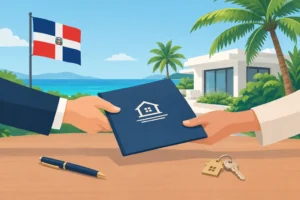
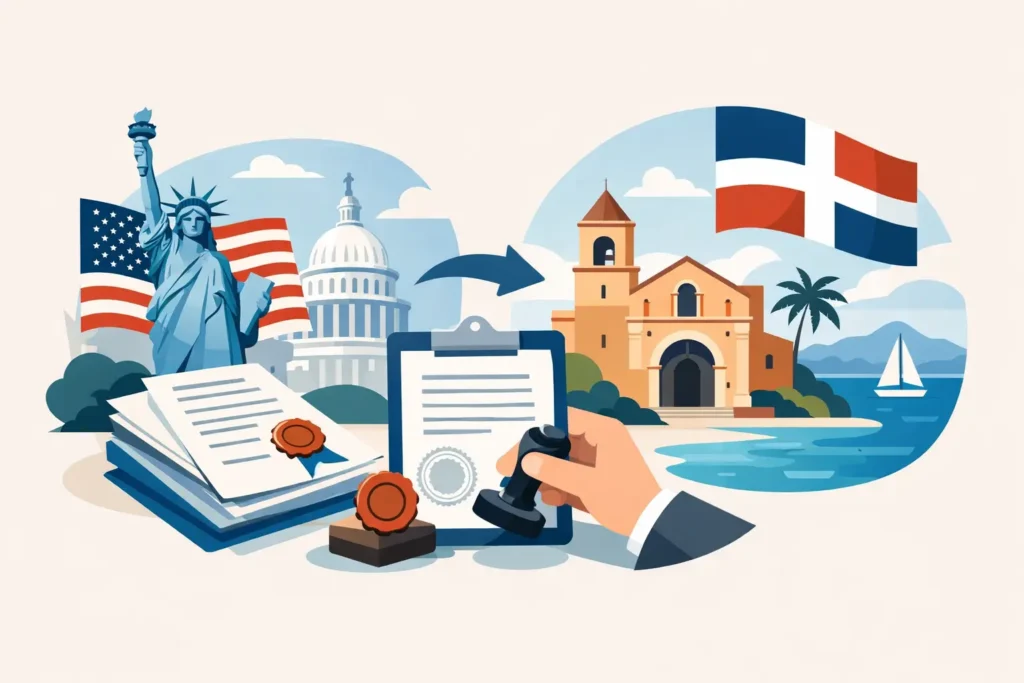
A document can be perfectly valid in the United States and still be unusable for a residency filing, bank account application, or company transaction in the Dominican Republic. The missing step is often authentication. Dominican apostille services help foreign nationals prepare documents so Dominican authorities and private institutions can recognize them with confidence.
For clients planning a move, the issue is rarely one document. A residency application may involve a birth certificate, marriage certificate, police certificate, medical records, proof of income, and documents for accompanying family members. Investors and entrepreneurs may also need corporate records, powers of attorney, or financial documents. Each document can follow a different authentication path, and submitting it in the wrong order can create avoidable delays.
What an Apostille Does – and Does Not Do
An apostille is a certificate issued under the Hague Apostille Convention. It confirms that the signature, seal, or official capacity shown on a public document is genuine for use in another participating country. Both the United States and the Dominican Republic use this system.
An apostille does not verify that every statement inside a document is true. It does not replace a translation, cure an expired record, or guarantee that a particular Dominican office will accept a document that does not meet its own filing requirements. It simply establishes the document’s official origin for international use.
That distinction matters. For example, an apostilled FBI background check may be properly authenticated, but a residency process may still require it to be recent and accompanied by a Spanish translation. A birth certificate may have an apostille, yet a bank could request a newly issued copy rather than an older record. Authentication is one part of a larger compliance process.
Which Documents Commonly Need Apostilles?
The right documents depend on your purpose in the Dominican Republic, your nationality, and the institution reviewing the file. For immigration matters, foreign nationals commonly need apostilled civil records such as birth certificates, marriage certificates, divorce decrees, and name-change records. Criminal record checks, including FBI reports for U.S. citizens, are also frequently part of the process.
For business and investment matters, the document list may include corporate formation documents, certificates of good standing, board resolutions, powers of attorney, and notarized declarations. Families may need school records, custody documentation, or adoption records. Retirees and remote workers may be asked to document income, pensions, or other financial arrangements, although the exact form of authentication depends on the receiving institution.
Not every document should be apostilled. A Dominican office may accept some documents in another form, while certain private records may first require notarization or certification before they can be authenticated. Requesting an apostille before confirming the destination requirement can mean paying for a process that does not solve the underlying issue.
Dominican Apostille Services for U.S. Records
The authority that issues the apostille depends on where and how the document was issued. This is one of the most common points of confusion for Americans relocating to the Dominican Republic.
State-issued documents, including most birth certificates, marriage certificates, divorce decrees, and state background checks, are generally apostilled by the Secretary of State or comparable authority in the state where the record originated. A Florida birth certificate, for instance, normally follows Florida’s apostille process, even if the applicant now lives in New York or abroad.
Federal documents follow a different route. FBI identity history summaries are federal records and require a federal apostille process. They cannot simply be sent to a state office. The same principle can apply to other federal documents.
Notarized documents require especially careful review. In many states, the notary’s commission must be certified at the county or state level before an apostille can be issued. The correct sequence varies by jurisdiction. A power of attorney prepared for a Dominican property transaction or company matter should therefore be reviewed before it is signed and authenticated, not after it has already been sent overseas.
The Order of Authentication and Translation Matters
For most documents intended for submission in the Dominican Republic, the apostille should be obtained before the document is translated into Spanish. The translator must be able to translate the apostille certificate as well as the underlying record. If a translation is completed first, the document may need to be redone after the apostille is attached.
Dominican immigration authorities, banks, courts, and commercial counterparts may have their own expectations for certified translations. Some matters require a translation prepared or formalized locally. Others may accept a translation produced abroad, provided it meets the applicable standard. There is no advantage in assuming one translation format works for every purpose.
A coordinated review can prevent a common problem: a client receives an apostille, obtains a translation, and later learns that the receiving authority wanted a newer version of the original record or a different certification. Timing, format, and destination all matter.
Timing: Freshness Can Be More Important Than You Expect
Apostilles themselves do not usually expire. The document they authenticate, however, may have a practical validity period set by the Dominican authority receiving it. Police certificates and medical records are particularly time-sensitive. Immigration applications often require recent criminal background checks, and a document that was valid when ordered may be too old by the time it is submitted if the process is not planned carefully.
Civil records can also present challenges. Some U.S. states issue certified copies that are accepted for apostille only if they are recently issued, contain an original registrar signature, or meet specific formatting rules. Long-form versus short-form certificates can matter as well. Before ordering a record, it is wise to confirm what version is appropriate for the Dominican procedure ahead.
Processing times vary substantially. State and federal agencies may experience backlogs, and shipping adds another variable when clients are outside the United States. Expedited options may be available in certain circumstances, but they are not universal. A realistic document calendar should account for record issuance, authentication, translation, courier handling, and the date your Dominican filing can be submitted.
Common Mistakes That Delay Dominican Filings
The most costly apostille errors are often procedural rather than legal. Clients may apostille a photocopy instead of a certified original, use a state apostille for a federal record, or obtain a background check too early. Another frequent issue is signing a power of attorney before confirming the required notarial language and authentication sequence.
There is also a difference between an apostille and consular legalization. Apostilles are used between countries that participate in the Hague Convention. If a document comes from a country outside that system, it may require a legalization process involving foreign ministries and Dominican consular authorities instead. A client with documents from the United Kingdom, Canada, the United States, or another country should not assume that every record follows the same route.
Finally, apostille requirements may differ by destination. A document suitable for a residency application is not automatically suitable for a bank account, real estate closing, tax registration, or incorporation file. The receiving party’s requirements should guide the preparation strategy.
How Professional Coordination Helps
Apostille assistance is most valuable when it is connected to the larger objective. Rather than treating each certificate as a separate task, a coordinated service can identify the documents needed for your visa, residency, family, investment, or business plan; confirm the issuing authority; organize the correct authentication sequence; and arrange translation where necessary.
For clients relocating from the United States, this also reduces the risk of discovering a document problem after arrival in the Dominican Republic. At Abreu & Associates, apostille coordination can be integrated with residency planning, FBI fingerprinting support, translations, and the practical steps that follow a move, including banking and business formation.
Before ordering or authenticating anything, start with the exact purpose of the document and the office that will receive it. That single step gives your paperwork a clearer path – and gives your relocation plans a better chance of moving forward without unnecessary interruption.