

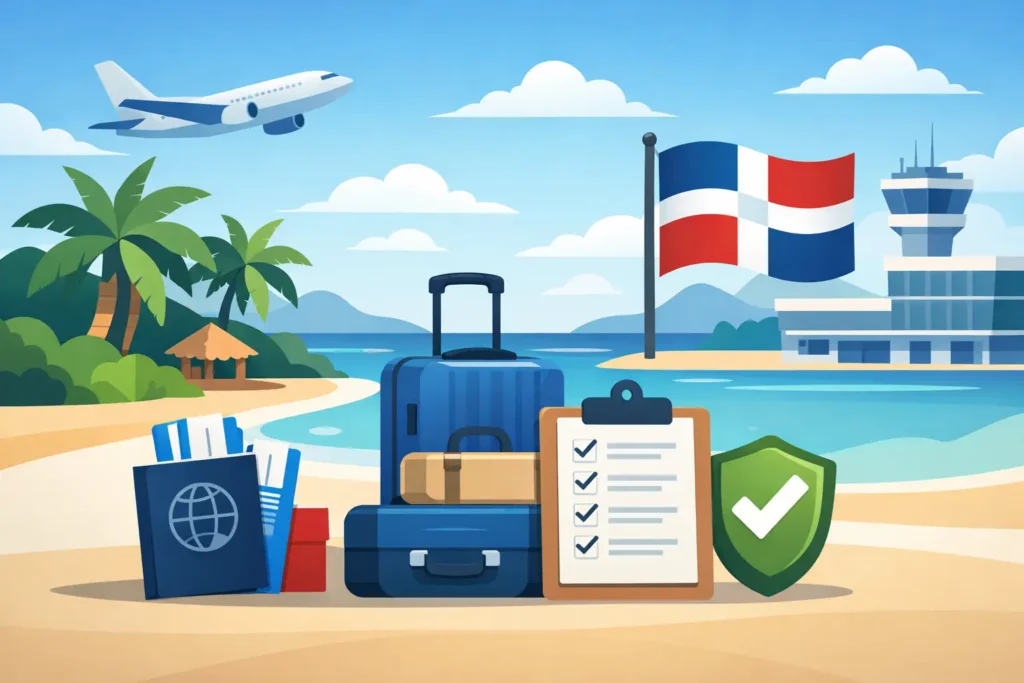
A beach rental, a return ticket, and a valid passport may be enough for a short Dominican Republic visit – but they are not a substitute for immigration status if you plan to make the country home. When people ask, “is Dominican Republic visa free,” the correct answer is: for some nationalities and some purposes, yes. Entry rules depend on your passport, the reason for travel, and how long you intend to remain in the country.
For U.S. citizens, the practical distinction is usually straightforward. A short visit for tourism generally does not require obtaining a Dominican visa in advance. But visa-free entry is not the same as permission to live, work locally, operate a business, or remain indefinitely.
Is Dominican Republic Visa Free for U.S. Citizens?
U.S. passport holders can generally enter the Dominican Republic for tourism without applying for a visa before travel. They must travel with a valid passport and complete the required electronic entry and exit information. In most tourist arrivals, the Tourist Card is included in the cost of an airline ticket, although travelers should confirm current airline and entry procedures before departure.
This visitor permission is designed for temporary stays. Travelers should also be ready to show evidence of onward or return travel if requested, and immigration officials retain discretion to assess admissibility at the border. A passport should have sufficient validity for the trip, even where a specific minimum validity period is not consistently enforced in the same way for every traveler.
The same general visa-free framework applies to many visitors from Canada, the United Kingdom, European Union countries, and selected countries in Latin America. That does not create one universal rule. Passport nationality matters. A traveler who holds a U.S. residence card but uses a passport from another country should check requirements based on the passport being presented, not only on U.S. immigration status.
What Visa-Free Entry Actually Allows
Visa-free tourist entry is for a visit. It is appropriate for vacation travel, visiting friends or family, evaluating neighborhoods, attending many short meetings, and getting an initial sense of whether the Dominican Republic fits your plans.
It does not automatically authorize the activities that commonly arise after a relocation decision. If you intend to take employment with a Dominican company, establish long-term residence, enroll in an extended academic program, or build your life and financial affairs in the country, a tourist entry should be treated as a starting point rather than a permanent solution.
Remote work can create a gray area that deserves careful planning. A person working online for a foreign employer while visiting may have a different factual situation from someone actively providing services to Dominican clients, hiring local staff, or managing a Dominican operating business. Immigration, tax, labor, and corporate considerations can overlap quickly. The right path depends on the actual activity, not simply on the label a traveler gives it.
Tourist Stays, Extensions, and Overstay Fees
A visa-free entry typically begins with a limited authorized tourist stay. The period commonly associated with tourism is 30 days, but travelers should verify the conditions that apply to their nationality and entry type at the time of travel. Rules, administrative practices, and documentation procedures can change.
Visitors who stay beyond their authorized period may be subject to overstay fees when leaving the country. In some cases, it may be possible to request an extension through the relevant immigration authority. Neither option should be mistaken for legal residency. Paying an overstay fee upon departure resolves the exit issue; it does not grant a person the rights or security of a resident.
This distinction matters for families and investors. Repeatedly entering as a tourist can feel workable in the early stages, especially for people dividing time between the United States and the Dominican Republic. Over time, however, it can complicate practical matters such as banking, insurance, driver’s licensing, long-term leases, business administration, and documenting a stable connection to the country.
When a Dominican Visa or Residency Process Is Needed
A Dominican visa may be required before travel for nationals who are not eligible for visa-free entry. Depending on the traveler’s purpose, this could include a tourist visa, business-related visa, student visa, or a residency-oriented visa process. Requirements can include passport copies, photographs, proof of financial means, police certificates, medical documentation, translated records, apostilles, and consular filings.
For Americans and others who can enter as tourists, the more relevant question is often not whether they need a visitor visa, but when they should begin a residency strategy. Residency is usually the appropriate conversation when a person intends to retire in the country, relocate with a spouse or children, purchase and manage a business, accept local employment, or make the Dominican Republic their primary base.
There are several potential residency pathways, including retirement, income-based, investment, employment, family-based, and ordinary residency options. Each route has its own financial thresholds, documentary requirements, timing, and long-term implications. An investor may qualify under a different framework than a retiree receiving pension income, while a family relocating with children may need to coordinate immigration filings with school enrollment, health coverage, housing, and civil documents.
A common mistake is waiting until the last possible moment to organize documents. Foreign-issued birth certificates, marriage certificates, divorce records, and criminal background checks may need apostilles, certified translations, and careful review before submission. FBI background checks and other supporting records also have limited practical validity for immigration purposes, so timing is as important as obtaining the right paperwork.
Entry Rules for Investors, Homebuyers, and Families
Buying property does not by itself grant Dominican residency or citizenship. Real estate can support a broader investment or relocation plan, but ownership and immigration status are separate legal issues. The same principle applies to opening a bank account or forming a company: these steps may be part of establishing yourself in the country, yet they do not replace the need for the appropriate immigration status.
For families, status planning should begin before arrival whenever possible. One spouse may be eligible through a pension or investment route, but dependents require their own supporting documentation and filings. Parents should account for school calendars, medical records, insurance arrangements, consent documentation for children traveling with one parent, and the time needed to obtain legalized records from abroad.
Entrepreneurs should also avoid assuming that a tourist entry covers every business activity. A preliminary trip to meet advisers, inspect property, and explore opportunities is one thing. Signing contracts, hiring staff, receiving local income, registering a company, and establishing tax residency require more deliberate coordination. A properly structured plan can help protect both immigration compliance and the commercial goals behind the move.
How to Prepare Before You Travel
Before booking a one-way flight or making long-term commitments, confirm the rules attached to your passport and planned activity. Keep a valid passport, a copy of your return or onward travel details, and access to accommodation information. Complete the required electronic travel form accurately, and make sure names and passport numbers match your travel documents exactly.
If your trip is exploratory, use it strategically. Meet with local professionals, assess the areas where you may live, and identify the documents you will need for residency before ordering records from multiple agencies. If your move is already decided, it is often more efficient to organize the immigration process alongside practical settlement tasks such as document translations, health insurance, banking preparation, and business planning.
Abreu & Associates provides all-inclusive immigration services for clients who need both legal direction and practical support during a Dominican Republic move. The goal is not simply to complete an application, but to help ensure your immigration status matches the life you are building.
The Dominican Republic can be easy to visit, but a successful long-term move deserves more than a return ticket and a tourist entry. Clarifying your intended stay early gives you the freedom to make decisions with confidence once you arrive.