
A family may have a lease waiting in Punta Cana, a retirement plan built around life in Las Terrenas, or a new Dominican business ready to open. Yet one question determines when those plans can become official: how long does Dominican residency take?
The practical answer is that most applicants should plan for several months from the start of document preparation to receiving a temporary residency card. A straightforward case can move more quickly, while missing documents, consular processing, translations, medical requirements, and government review can extend the timeline. The strongest approach is to begin early and treat the process as a sequence of connected steps, not a single application.
For foreign nationals moving from the United States, Canada, Europe, or elsewhere, Dominican residency is a legal status that allows you to establish a more stable life in the country. It can support long-term living arrangements, local banking needs, business activity, family planning, and future permanent residency or citizenship goals.
How Long Does Dominican Residency Take From Start to Finish?
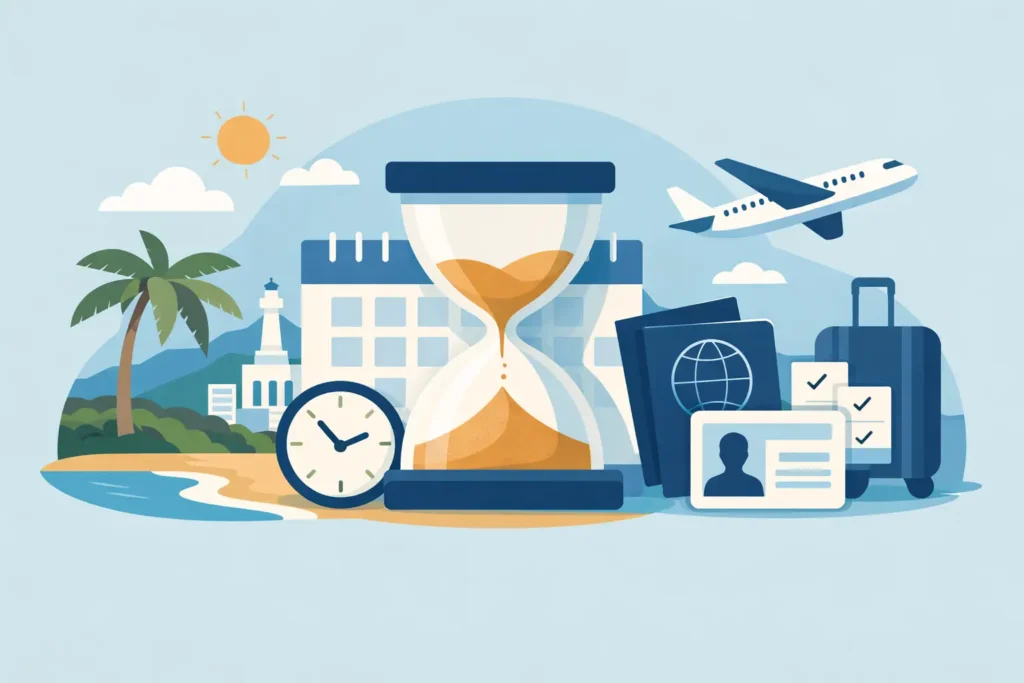
For many applicants, the initial Dominican residency process takes approximately four to eight months overall. That estimate includes gathering documents abroad, obtaining the appropriate visa through a Dominican consulate, entering the country, completing local filing requirements, and waiting for the immigration authority to issue the temporary residency card.
The government processing stage inside the Dominican Republic may take a few months after submission, but the full timeline begins well before that point. A clean, complete application is often the difference between an orderly process and a frustrating delay.
Your individual timeframe depends on the residency category, your country of origin, the condition of your civil documents, and whether you must coordinate documents from more than one jurisdiction. For example, an applicant with a current passport, properly apostilled birth certificate, current FBI background check, and organized financial evidence will generally be better positioned than someone who starts gathering documents after arriving in the country.
Stage One: Preparing Documents Abroad
Document preparation commonly takes four to eight weeks, although it can take longer when an applicant needs replacement records or must request checks from multiple countries. Most applicants need a valid passport, birth certificate, police clearance certificate, medical documents, photographs, proof of financial capacity, and supporting records appropriate to their residency category.
For U.S. applicants, the FBI background check is frequently one of the key timing factors. It must be obtained, apostilled, translated when required, and still valid when submitted. Canadian applicants may face similar timing considerations with RCMP documentation. A criminal record check that is too old, an apostille that is missing, or an incomplete translation can require a new document cycle.
This stage deserves careful attention because Dominican immigration authorities evaluate both the substance and the formal validity of documents. A document may be genuine but unusable if it lacks the required apostille, legalization, translation, or date validity.
Stage Two: Obtaining the Residency Visa
In many cases, applicants first obtain a residency visa through the Dominican consulate with jurisdiction over their place of residence. Consular processing times vary, but planning for several weeks is sensible. The consulate may request additional information, and appointment availability can affect the schedule.
The visa is an entry step, not the final residency approval. After entering the Dominican Republic with the proper visa, the applicant proceeds with the local residency application. Timing matters here. Applicants should not assume they can arrive as tourists and resolve every immigration requirement later without a strategy.
There are circumstances in which the correct process or category may differ. Investors, retirees, pension recipients, applicants with Dominican family ties, employees, and business owners may have different supporting-document requirements. The right category should be determined before documents are collected, since changing direction mid-process can add time and expense.
Stage Three: Filing the Residency Application in the Dominican Republic
Once in the Dominican Republic, the applicant completes the local portion of the process. This generally includes filing with the appropriate immigration authority, completing medical examinations, submitting required documents, paying government fees, and attending appointments as needed.
This is where professional coordination is particularly valuable. Small administrative details can create avoidable setbacks: an inconsistent name across records, an expired police certificate, a translation that does not match the original, or financial documents that do not clearly establish the applicant’s situation.
After the application is accepted, the review period can range from several weeks to several months. Government workloads, public holidays, system changes, and additional document requests can all affect the pace. No reputable firm should promise a fixed approval date, because the final decision and issuance schedule remain under government control.
What Can Delay Dominican Residency?
Most delays are not caused by one major problem. They arise when several manageable issues compound. A background check may arrive late, then need an apostille, then require translation, leaving too little validity time for consular submission. Or a family may discover that each dependent needs separate civil documents prepared to the same standard.
Common sources of delay include incomplete applications, documents that have expired, missing apostilles, incorrect or uncertified translations, inconsistent personal information, unclear proof of income or assets, and missed appointments. Applicants who have lived in several countries may need extra planning for police certificates. Married applicants and families should also verify whether marriage certificates, divorce decrees, custody documents, or children’s birth certificates are needed.
Financial documentation deserves special care. The Dominican Republic offers pathways for people who can demonstrate stable income, pension income, investments, business activity, or other qualifying resources. The evidence must be current, understandable, and appropriate for the category. Simply having funds available does not always mean the records meet the immigration standard.
Temporary Residency Is Not the End of the Timeline
Initial residency is generally temporary. The card has a limited validity period and must be maintained through renewal procedures. For people seeking a longer-term future in the Dominican Republic, the next milestone may be permanent residency, followed in some cases by eligibility to pursue citizenship.
The exact timing for permanent residency depends on the legal pathway and the applicant’s circumstances. Some categories may offer accelerated treatment or different requirements, particularly for qualifying investors, retirees, or individuals with specific family or economic connections. Others follow the standard temporary residency and renewal route.
This distinction matters because “residency” can mean different things in conversation. One person may be asking how soon they can receive their first card. Another may mean how long it takes to become a permanent resident. A third may be planning around a future citizenship application. Each goal has its own timeline, documentation requirements, and strategy.
How to Make the Process More Predictable
You cannot control government review times, but you can reduce the variables that tend to slow an application. Start by choosing the correct immigration route before requesting documents. Then create a document plan that accounts for expiration dates, apostilles, translations, consular appointments, and travel dates.
It is also wise to keep copies of every submitted record and confirm that your name appears consistently across your passport, birth certificate, bank records, marriage certificate, and police clearances. If there is a difference in spelling, a former name, or a prior immigration issue, address it early rather than hoping it will go unnoticed.
For families, entrepreneurs, and retirees, residency is rarely the only concern. You may also need help with a lease or property decision, health insurance, banking, tax planning, a driver’s license, or business formation. Coordinating these steps around the immigration timeline helps prevent a legal approval from becoming the only part of the move that is ready.
Abreu & Associates provides all-inclusive immigration services designed to coordinate the legal process with the practical requirements of establishing life in the Dominican Republic. That support can be especially useful when your residency application is connected to a real estate purchase, retirement relocation, investment, or family transition.
The best time to begin is before your desired move date becomes urgent. With complete documents, the right residency category, and expert guidance at each stage, you can move forward with a realistic schedule and the confidence that your new chapter is being built on proper legal footing.