

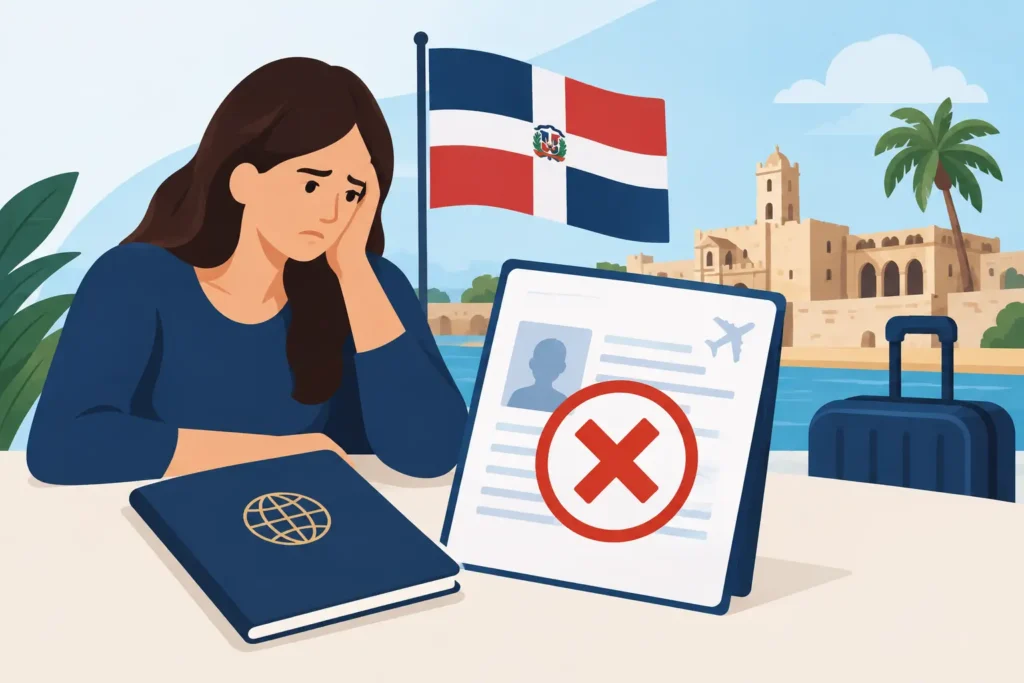
A visa refusal at a Dominican consulate can feel like an abrupt stop to a carefully planned retirement, family move, investment, or business launch. Yet Dominican visa denials are often connected to correctable gaps in documentation, inconsistent information, or an application that did not clearly demonstrate its purpose. A denial does not always mean that relocating to the Dominican Republic is no longer possible. It does mean that the next step should be deliberate.
For foreign nationals, the practical challenge is that a visa application is not simply a form-filling exercise. Consular officers assess the documents, the applicant’s circumstances, and whether the stated reason for travel is supported by credible evidence. Requirements can also vary by visa category and the Dominican consulate processing the application. Understanding where an application became vulnerable is the first step toward preparing a stronger one.
Why Dominican Visa Denials Happen
A Dominican visa application must tell one consistent story. The stated purpose of travel, financial records, employment or retirement documents, invitation letters, accommodation information, and supporting personal records should all point in the same direction. When they do not, a consulate may question whether the applicant meets the category requirements or intends to use the visa as described.
One common issue is incomplete or improperly prepared documentation. Documents issued abroad may need legalization or apostille certification, official translation into Spanish, and current validity dates. A bank statement, police certificate, birth certificate, marriage certificate, or letter of employment may appear straightforward, but it can be rejected if it is outdated, missing required authentication, or translated inaccurately.
Financial evidence is another frequent concern. Applicants should be able to demonstrate that they have sufficient lawful resources for the purpose of their trip or planned stay. The appropriate evidence depends on the visa type and the applicant’s circumstances. Retirees may rely on pension documentation and savings, while investors, entrepreneurs, and employees may need to show different forms of income, assets, business activity, or sponsorship. A large recent deposit with no explanation can raise as many questions as it answers.
Consular officers may also deny an application when information is inconsistent. Differences in names, dates, addresses, marital status, employment history, or prior travel details can create doubt, particularly if the discrepancy is not explained. These issues are common when applicants have changed their name, hold dual citizenship, were married abroad, or have records prepared in more than one country.
Prior immigration history can matter as well. Previous overstays, deportations, visa refusals, criminal history, or unresolved immigration concerns in the Dominican Republic or another country may require disclosure and careful legal analysis. Trying to omit an unfavorable fact is usually more damaging than addressing it accurately with context and supporting records.
A Denial Is Not Always a Final Answer
The meaning of a refusal depends on the reason, the visa category, and the information available from the consulate. Some cases can be resolved by correcting a missing document or submitting clearer evidence. Others require more substantial preparation, especially where there are questions about financial eligibility, prior immigration issues, or the applicant’s intended purpose in the country.
Before submitting another application, obtain and preserve every document connected to the decision. This includes the refusal notice, receipt, appointment records, copies of the original application, supporting documents, and any emails from the consulate. Even if the explanation is brief, these materials help identify what was submitted and what may need to change.
Reapplying immediately with the same package rarely improves the outcome. If the original application did not establish sufficient income, for example, the new application should not merely include another copy of the same bank statement. It should address the underlying concern with better records, a clear source-of-funds explanation, or a more appropriate visa strategy where available.
It is also worth confirming whether a visa is the right pathway for the applicant’s objective. A person planning a long-term relocation may need to consider the relationship between the entry visa process and a later residency application. An entrepreneur may need to coordinate immigration planning with company formation, investment documentation, tax considerations, and local banking needs. Treating each element separately can create avoidable inconsistencies.
How to Prepare a Stronger Dominican Visa Application
The strongest applications are organized before the consular appointment, not assembled in response to a last-minute document request. Start by defining the precise purpose of travel and selecting the visa category that fits that purpose. Do not choose a category because it appears easier if the supporting facts point elsewhere.
Next, review every document for consistency. Names should match the passport and civil records. Dates should make sense across employment letters, bank statements, travel history, and residence information. If a difference cannot be avoided, provide a concise explanation supported by evidence, such as a marriage certificate, name-change record, or dual-nationality documentation.
Financial records should be easy to understand. Rather than submitting a confusing stack of statements, present records that show the source, stability, and availability of funds. If income comes from retirement benefits, rental properties, a business, investments, or remote employment, include the records that explain that income. Where a family member or sponsor will provide support, the relationship and the sponsor’s ability to assist should be documented clearly.
Foreign-issued documents deserve special attention. Confirm whether each record requires an apostille or legalization, whether it needs a Spanish translation, and whether it remains within the required issuance period. A properly apostilled document can still cause problems if the translation is incomplete or the certificate has expired by the time it reaches the consulate.
Applicants should also prepare for questions about their plans in the Dominican Republic. A retiree may need to explain the intended living arrangement and financial self-sufficiency. A student should be prepared to document enrollment and educational plans. An investor or business owner should have a coherent explanation of the proposed activity, relevant corporate documents, and evidence that supports the investment or commercial purpose.
When Professional Guidance Makes Sense
Not every denial requires extensive legal intervention. A simple administrative deficiency may be resolved with a corrected record and a carefully prepared new submission. However, professional guidance becomes particularly valuable when a case involves prior denials, criminal or immigration history, unclear financial documentation, family-based circumstances, business or investment plans, or a planned transition from visa status to residency.
The goal is not to overwhelm the consulate with paperwork. It is to provide the right documents in the right form, with a clear explanation of why the applicant qualifies. For clients planning a broader move, immigration preparation should also be coordinated with practical next steps such as document translation, apostilles, background checks, health insurance, housing plans, business setup, and banking requirements.
Abreu & Associates helps foreign nationals assess their immigration options and prepare for the documentation and settlement requirements that come with establishing a life in the Dominican Republic. A well-managed case creates clarity long before an applicant reaches the consular window.
A visa denial is disappointing, but it can also reveal exactly where a relocation plan needs stronger evidence or better coordination. Address the reason for refusal carefully, avoid rushed resubmissions, and approach the next application as a complete, credible account of why the Dominican Republic is the right next step for you.